 English
 简体中文
简体中文 русский
 عربى
عربى français
 Español
 日本語
日本語 한국어
한국어 Italian
 Deutsche
 português
 Türk
Türk हिंदी
हिंदी Persian
 Polskie
 Tiếng Việt
 Indonesian
 Filipino
 Urdu
Urdu Bengali
 Український
 Swahili
 Kazakh
 Uzbek
Uzbek

Passive NFC Key Fob Tags: Unlocking the Future of Secure Access
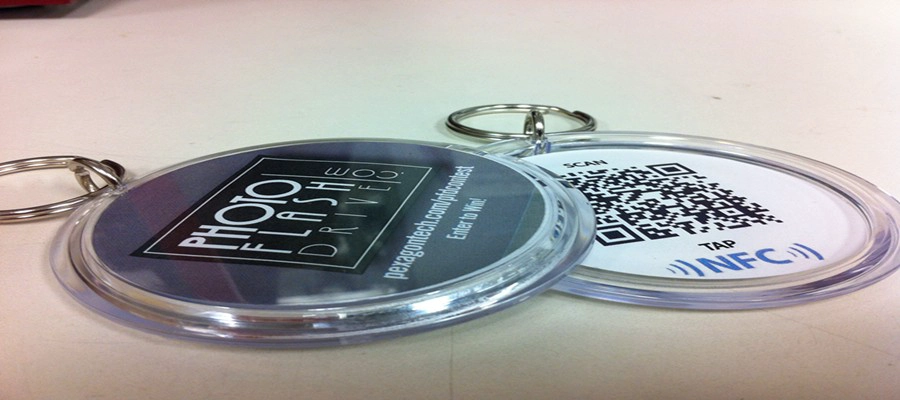
In an era where convenience and security are paramount, passive NFC key fob tags are emerging as a game-changing technology in access control and beyond. These unassuming devices, often no larger than a traditional keychain, are revolutionizing how we interact with everything from office buildings to payment systems. But what exactly are passive NFC key fob tags, and why are they gaining such widespread adoption?
What Are Passive NFC Key Fob Tags?
Passive NFC key fob tags are small, battery-less devices that use Near Field Communication (NFC) technology to transmit data wirelessly over short distances—typically a few centimeters. Unlike active NFC devices, which have their own power source, passive tags rely entirely on the electromagnetic field generated by an NFC reader, such as a smartphone or dedicated scanner, to operate. When brought close to a reader, the tag draws power from the reader's signal and responds with pre-programmed information, like access codes or identification data. This makes them incredibly energy-efficient and cost-effective for mass deployment.
How Do They Work?
The magic of passive NFC key fobs lies in their simplicity. Embedded with a tiny chip and antenna, these tags store data that can be read or written by compatible devices. For instance, when a user taps their key fob against a reader at a secure door, the reader emits a radio frequency that powers the tag. The tag then transmits its unique identifier, granting or denying access based on pre-set permissions. This process takes mere milliseconds, ensuring seamless user experiences without the need for batteries or complex maintenance.
Applications and Benefits
Passive NFC key fobs are already making waves across various industries. In corporate environments, they replace traditional keys and cards for door access, reducing the risk of duplication or loss. Retailers use them for loyalty programs and contactless payments, while healthcare facilities employ them to secure sensitive areas. According to a recent report by MarketsandMarkets, the global NFC market is projected to reach $34.9 billion by 2026, driven largely by the adoption of passive tags in smart access systems.
One of the standout advantages is their affordability—passive tags cost as little as $1 to $5 per unit, making them accessible for small businesses and large enterprises alike. They also offer enhanced security through encryption and unique identifiers, minimizing the risk of unauthorized cloning. "Passive NFC key fobs represent a shift toward more intuitive and scalable security solutions," says Dr. Emily Chen, a technology analyst at SecureTech Innovations. "They bridge the gap between physical and digital worlds, offering a user-friendly alternative to passwords or biometrics in many scenarios."
Challenges and Future Outlook
Despite their benefits, passive NFC tags are not without limitations. Their short range requires close proximity to readers, which can be a hurdle in high-traffic areas. Additionally, concerns about data privacy and potential hacking remain, though advancements in encryption are steadily addressing these issues. Looking ahead, experts predict integration with Internet of Things (IoT) devices, enabling smarter homes and cities where these tags manage everything from public transport to personalized shopping experiences.
As industries continue to embrace digital transformation, passive NFC key fob tags are poised to become a staple in everyday life. For consumers and businesses, understanding this technology is key to harnessing its potential for a more connected and secure future.