 English
 简体中文
简体中文 русский
 عربى
عربى français
 Español
 日本語
日本語 한국어
한국어 Italian
 Deutsche
 português
 Türk
Türk हिंदी
हिंदी Persian
 Polskie
 Tiếng Việt
 Indonesian
 Filipino
 Urdu
Urdu Bengali
 Український
 Swahili
 Kazakh
 Uzbek
Uzbek

The Humble Key Fob Gets a Digital Upgrade: Passive NFC Tags Reshaping Access Control
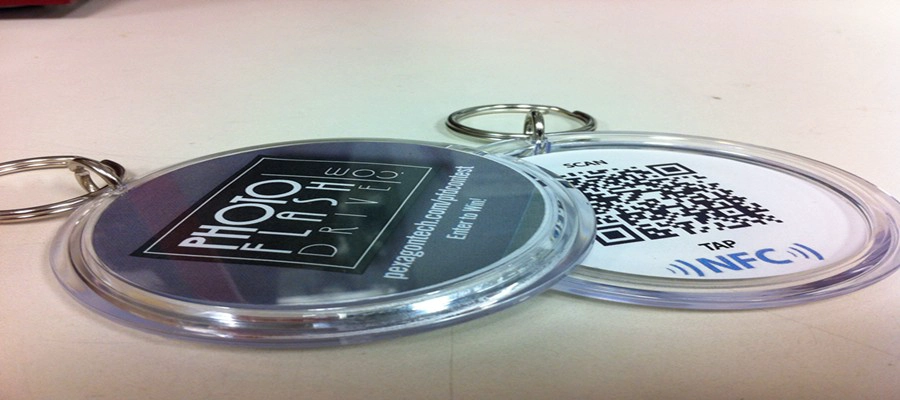
In an era where convenience and security are paramount, a familiar technology is quietly revolutionizing how we access everything from office buildings to hotel rooms. Passive NFC key fob tags, the silent workhorses of modern contactless systems, are becoming ubiquitous, offering a blend of simplicity, affordability, and robust functionality.
What Are Passive NFC Key Fob Tags?
At their core, passive NFC (Near Field Communication) key fob tags are small, portable devices that enable contactless data exchange over very short distances—typically a few centimeters. Unlike their "active" counterparts, passive tags have no internal power source. They are powered entirely by the electromagnetic field emitted by an NFC reader, such as a smartphone or a dedicated access panel.
When the fob is brought near a reader, the reader's energy activates the tag's microchip. This chip then transmits its stored unique identifier or data packet back to the reader wirelessly, facilitating instant verification or triggering an action.
The Engine of Modern Convenience
The applications for these unassuming devices are vast and growing:
-
Physical Access Control: The most common use, replacing traditional metal keys and magnetic stripe cards in corporate offices, residential complexes, gyms, and university dormitories.
-
Hotel Industry: Streamlining check-in processes, where a pre-programmed fob serves as a room key for the duration of a guest's stay.
-
Event Management: Providing secure, scannable entry to conferences, festivals, or exclusive venues.
-
Logistics and Inventory: Tagging assets or packages for quick tracking and management using an NFC-enabled smartphone.
-
Lightweight Authentication: As a simple two-factor authentication token for computers or secure systems.
Why the Shift to Passive NFC Fobs?
The migration towards passive NFC technology is driven by several key advantages:
-
Enhanced Security: Each tag's UID (Unique Identifier) is extremely difficult to duplicate, offering better security than easily cloned magnetic stripes. Data can also be encrypted for high-security applications.
-
Durability & Form Factor: With no battery to replace, passive fobs are highly durable, weather-resistant, and compact, easily fitting on a keychain.
-
Cost-Effectiveness: They are inexpensive to produce and deploy, making them an economical solution for large-scale access control systems.
-
User-Friendly Experience: Access is as simple as a "tap" or quick wave—faster and more intuitive than inserting a card or typing a code.
-
Integration Potential: They seamlessly integrate with modern smartphone ecosystems, allowing for remote provisioning, management, and even the use of a phone itself as a virtual key fob.
Security Considerations and the Road Ahead
While highly secure against casual cloning, no technology is impervious. Advanced threats like relay attacks pose theoretical risks, which the industry mitigates through encryption, short-range requirements, and emerging protocols. The future points towards even greater integration, with passive NFC tags potentially converging with biometric systems and the Internet of Things (IoT) for multifunctional smart environments.
From granting entry to a server room to checking into a vacation rental, the passive NFC key fob tag exemplifies how a simple, power-free piece of technology can become a cornerstone of our secure and connected daily lives. It’s not just a key; it’s a digital identity in the palm of your hand.