 English
 简体中文
简体中文 русский
 عربى
عربى français
 Español
 日本語
日本語 한국어
한국어 Italian
 Deutsche
 português
 Türk
Türk हिंदी
हिंदी Persian
 Polskie
 Tiếng Việt
 Indonesian
 Filipino
 Urdu
Urdu Bengali
 Український
 Swahili
 Kazakh
 Uzbek
Uzbek

UHF RFID Technology: Revolutionizing Retail Efficiency with Smart Tracking
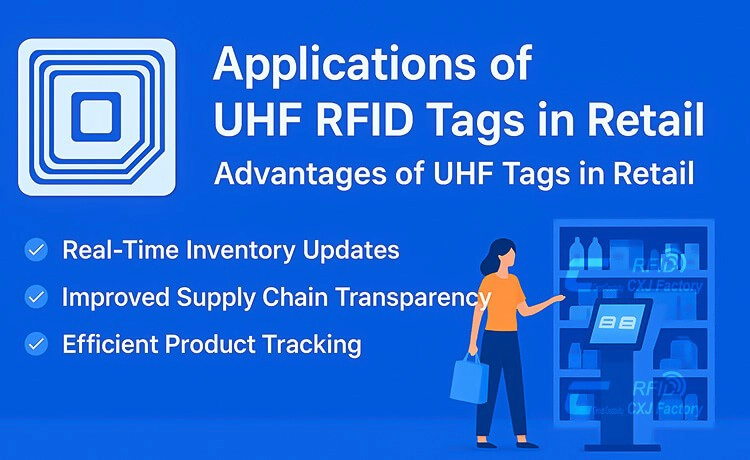
In an era defined by digital transformation and supply chain optimization, UHF RFID technology is emerging as a game-changer for the retail industry. By enabling high-speed, accurate, and automated item-level tracking, this innovative solution is helping retailers enhance operational efficiency, reduce costs, and elevate the customer experience.
Unlike traditional barcode systems, UHF (Ultra-High Frequency) RFID tags can be read from several meters away, without requiring a direct line of sight. This allows retailers to quickly scan entire inventories—whether on shelves, in storage, or in transit—dramatically reducing the time and labor associated with manual stock checks. With real-time visibility into product movement, businesses can minimize out-of-stock scenarios, prevent overstocking, and streamline replenishment processes.
Major retail players worldwide are already leveraging UHF RFID for a variety of applications. For instance, fashion brands are using the technology to track garments from warehouse to point of sale, enabling seamless inventory management and loss prevention. Grocery chains, meanwhile, are adopting RFID to monitor perishable goods, improving freshness and reducing waste.
“UHF RFID brings a new level of intelligence to retail operations,” says Dr. Lisa Monroe, a supply chain technology expert. “It doesn’t just track products—it turns inventory data into actionable insights, helping retailers make smarter decisions faster.”
In addition to improving backend operations, UHF RFID is also enhancing the in-store experience. Smart fitting rooms equipped with RFID readers can detect items brought in by shoppers and suggest complementary products on digital screens. Similarly, RFID-enabled self-checkout systems allow customers to pay for multiple items in seconds, eliminating long queues.
As the technology becomes more affordable and scalable, its adoption is expected to grow across retail segments. According to a recent market analysis, the global UHF RFID segment is projected to expand at a compound annual growth rate of over 12% in the next five years, with retail being one of the key drivers.
While challenges such as tag cost and integration with existing systems remain, the return on investment—in terms of time savings, accuracy, and sales uplift—is making UHF RFID an increasingly essential tool for modern retailers.
From smart mirrors to automated warehouses, UHF RFID is not just streamlining retail tracking—it’s reshaping the future of retail itself.