 English
 简体中文
简体中文 русский
 عربى
عربى français
 Español
 日本語
日本語 한국어
한국어 Italian
 Deutsche
 português
 Türk
Türk हिंदी
हिंदी Persian
 Polskie
 Tiếng Việt
 Indonesian
 Filipino
 Urdu
Urdu Bengali
 Український
 Swahili
 Kazakh
 Uzbek
Uzbek

Unlocking Efficiency: A Deep Dive into Passive RFID Solutions
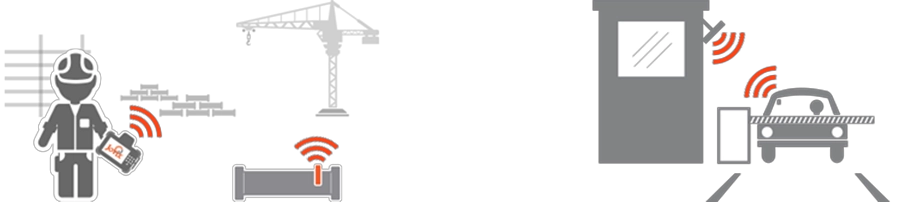
In an era where speed, accuracy, and cost-effectiveness are paramount, Passive Radio Frequency Identification (RFID) technology is emerging as a silent powerhouse across industries. But what exactly is a Passive RFID solution, and why is it becoming indispensable?
Unlike active RFID systems, which rely on battery-powered tags, passive RFID tags have no internal power source. Instead, they harness energy from radio waves emitted by an RFID reader. When a tag comes within range, it absorbs this energy, powers up, and transmits its stored data—such as a unique identifier—back to the reader. This simple yet ingenious mechanism enables seamless, wireless tracking without the need for maintenance or batteries in the tags themselves.
How It Works
A typical passive RFID system consists of three core components: a tag (attached to an object), a reader (which sends and receives signals), and backend software for data management. The tags are affordable, durable, and can be discreetly embedded in products, packaging, or assets. From retail inventory and logistics to healthcare and smart manufacturing, passive RFID solutions provide real-time visibility, reduce manual errors, and streamline operations.
Transformative Applications
In retail, companies use passive RFID to manage inventory with pinpoint accuracy, minimizing stockouts and overstock. In supply chains, it enables end-to-end tracking, from warehouse to delivery. Hospitals deploy it to monitor medical equipment, while libraries rely on it for automated checkouts. The technology’s scalability and low cost make it accessible to businesses of all sizes.
Challenges and Future Outlook
Despite its advantages, passive RFID faces hurdles like signal interference and limited read range compared to active systems. However, advancements in chip design and reader sensitivity are steadily overcoming these barriers. Analysts predict integration with IoT and AI will further enhance its capabilities, paving the way for smarter, fully automated environments.
“Passive RFID is no longer just a tool for identification—it’s a backbone for digital transformation,” says Lisa Park, an IoT analyst at ABI Research. “As tags become even cheaper and smarter, we’ll see them in everything from smart cities to everyday consumer goods.”
With its blend of simplicity and power, passive RFID is quietly reshaping how we track, manage, and interact with the physical world.