 English
 简体中文
简体中文 русский
 عربى
عربى français
 Español
 日本語
日本語 한국어
한국어 Italian
 Deutsche
 português
 Türk
Türk हिंदी
हिंदी Persian
 Polskie
 Tiếng Việt
 Indonesian
 Filipino
 Urdu
Urdu Bengali
 Український
 Swahili
 Kazakh
 Uzbek
Uzbek

What Are RFID Systems Composed Of? A Breakdown of Key Components
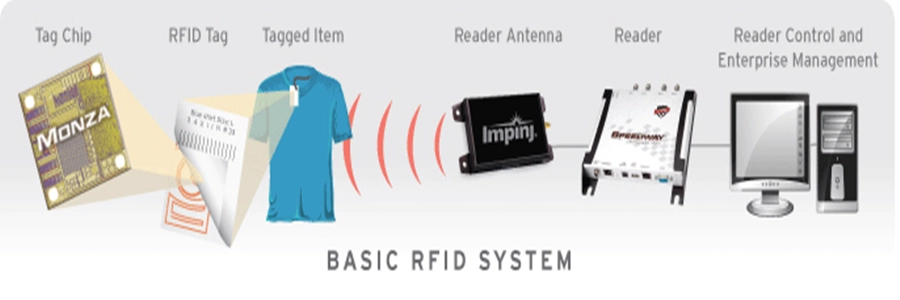
In an era where automation and connectivity are transforming industries, Radio-Frequency Identification (RFID) systems have emerged as a cornerstone technology, enabling seamless tracking and data collection. But what exactly are RFID systems composed of? This article delves into the essential components that make these systems work, highlighting their roles and real-world applications.
RFID systems are automated identification solutions that use radio waves to transmit data between tags and readers, without the need for direct line-of-sight. They are widely adopted in sectors such as retail, logistics, healthcare, and access control due to their efficiency and accuracy. At their core, RFID systems consist of several key elements that work together to capture and process information.
The Main Components of RFID Systems
-
RFID Tags: Often referred to as transponders, these are small devices attached to objects or assets. They contain a microchip for storing data and an antenna for communication. Tags come in various forms, including passive (powered by the reader's signal), active (with their own power source for longer range), and semi-passive hybrids. For instance, in inventory management, passive tags are commonly used to track products in warehouses.
-
RFID Readers: Also known as interrogators, these devices send and receive radio signals to communicate with tags. Readers can be fixed, handheld, or integrated into mobile devices, and they are responsible for reading the data stored on tags and transmitting it to a central system. In retail environments, readers help automate checkout processes by scanning multiple items simultaneously.
-
Antennas: Integrated into both tags and readers, antennas facilitate the transmission of radio waves. They determine the range and efficiency of communication. For example, in access control systems, antennas ensure that tags on keycards are detected accurately at entry points.
-
Software and Middleware: This component includes applications and platforms that process the data collected by readers. It often involves database management, analytics, and integration with existing enterprise systems. In supply chain operations, software helps monitor inventory levels in real-time, reducing errors and improving decision-making.
-
Backend Systems: These encompass servers, networks, and databases that store and manage the aggregated data. They enable functionalities like reporting, alerts, and integration with other technologies such as IoT (Internet of Things) devices.
Applications and Future Outlook
RFID systems are revolutionizing industries by enhancing visibility and efficiency. In healthcare, they track medical equipment to prevent losses, while in logistics, they optimize shipment tracking. According to industry experts, the global RFID market is projected to grow significantly, driven by advancements in IoT and smart city initiatives.
In conclusion, understanding the components of RFID systems—tags, readers, antennas, software, and backend infrastructure—reveals how this technology enables automation and data-driven insights. As innovations continue to emerge, RFID systems are set to play an even larger role in shaping the future of connected environments.
For more updates on emerging technologies, stay tuned to our news section.