 English
 简体中文
简体中文 русский
 عربى
عربى français
 Español
 日本語
日本語 한국어
한국어 Italian
 Deutsche
 português
 Türk
Türk हिंदी
हिंदी Persian
 Polskie
 Tiếng Việt
 Indonesian
 Filipino
 Urdu
Urdu Bengali
 Український
 Swahili
 Kazakh
 Uzbek
Uzbek

RFID Tag Usage Surges: Key Innovations and Market Shifts Expected by 2026
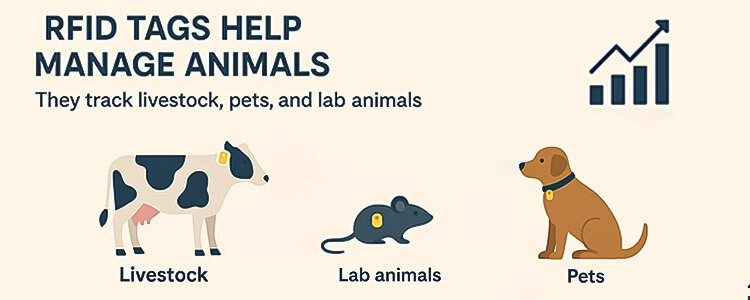
The global market for Radio-Frequency Identification (RFID) tags continues its remarkable expansion, driven by supply chain digitalization, retail transformation, and Industry 4.0 initiatives. Annual usage now comfortably exceeds tens of billions of units worldwide. As we look toward 2026, several key trends are poised to redefine the landscape, moving beyond simple inventory tracking to enabling a more connected, intelligent, and sustainable future.
Current Growth Engine
Today’s growth is fueled by the pervasive need for real-time visibility. Retail remains a dominant force, using item-level tagging for accuracy and loss prevention. However, the most significant momentum comes from logistics, healthcare (asset and patient tracking), manufacturing (tools and work-in-process), and libraries. The adoption of RAIN RFID (UHF) tags, in particular, has accelerated due to their longer read range and lower cost-per-tag, making mass-scale deployments economically viable.
2026: The Horizon of Integration and Intelligence
Industry analysts forecast 2026 not as a year of a single breakthrough, but as an inflection point where convergence and maturity create new value paradigms.
-
Sustainability Takes Center Stage: A major shift will be the push towards eco-friendly tags. Expect wider adoption of tags made from paper, biodegradable substrates, and designs that facilitate easier recycling. "Green RFID" will transition from a niche demand to a procurement requirement for major corporations under ESG mandates.
-
The "Sensor Tag" Evolution: Simple identification will give way to condition monitoring. RFID tags integrated with tiny sensors will become more affordable, capable of logging and transmitting data on temperature, humidity, shock, and tampering throughout an item's journey. This is a game-changer for pharmaceuticals, perishable foods, and high-value electronics.
-
Seamless Integration with AI and IoT: RFID will increasingly function as the essential data-collection layer for AI-driven analytics platforms. The vast streams of location and event data from RFID readers will feed machine learning models to predict stockouts, optimize warehouse layouts, prevent equipment failures, and automate replenishment with minimal human intervention.
-
Circular Economy and Lifecycle Management: RFID tags will be instrumental in enabling circular business models. Tags attached at the point of manufacture will track products through their entire lifecycle—first sale, resale, rental, repair, and final recycling—providing the data backbone for managing product-as-a-service and take-back programs.
-
Enhanced Security and Anti-Counterfeiting: With the rise of global trade and e-commerce, secure authentication is critical. Cryptographic RFID tags and blockchain-linked digital identities will see broader deployment to combat counterfeit goods in sectors like luxury apparel, aerospace parts, and automotive components.
Challenges and Considerations
The path to 2026 is not without hurdles. Concerns over data privacy, the need for global frequency standardization, and managing the sheer volume of data generated will require ongoing attention from industry consortia and regulators. Furthermore, achieving true cost-effectiveness for highly specialized tags (like robust sensor tags) remains a development focus.